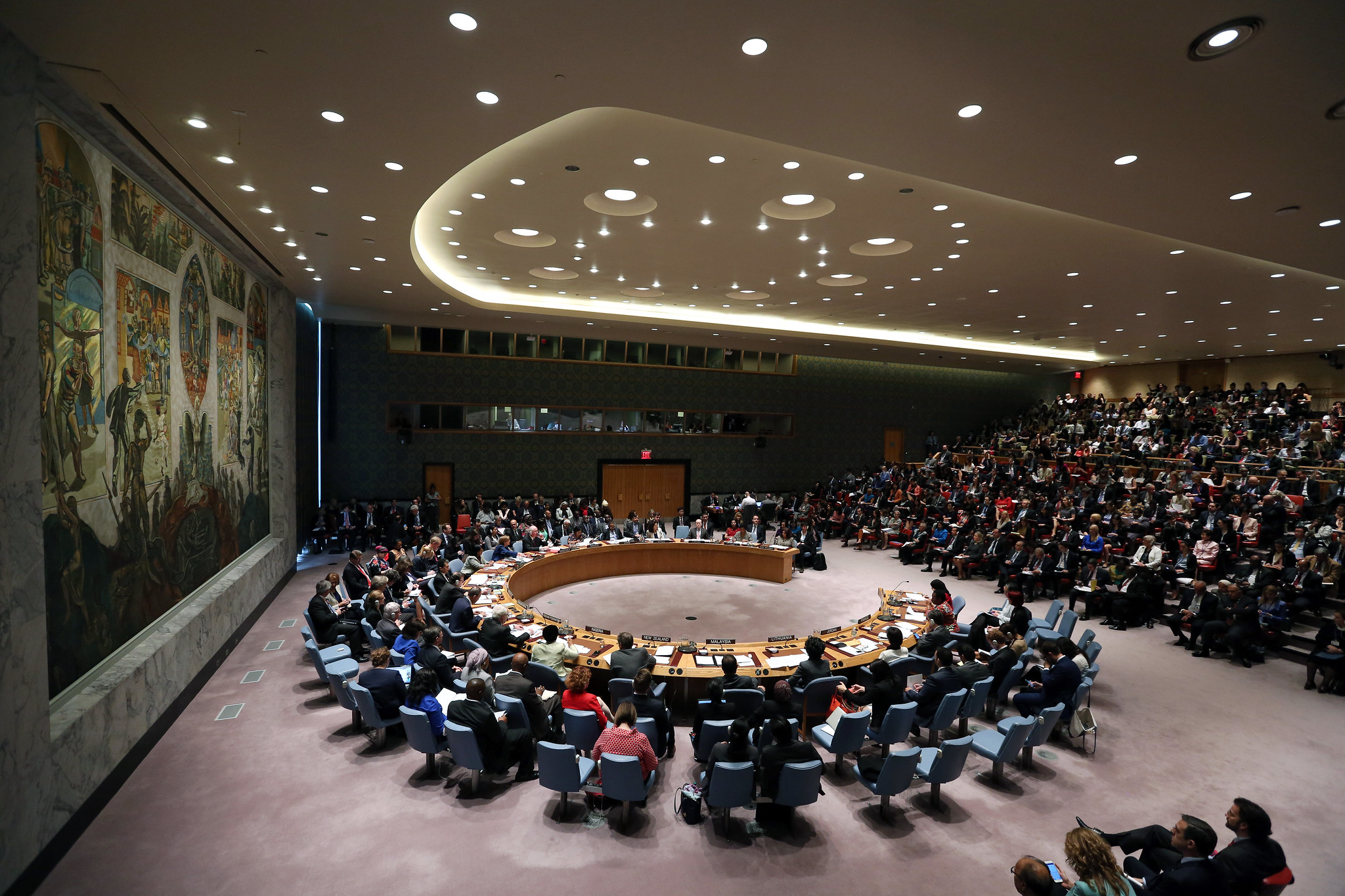
In our first round-up of 2026, we’re reflecting on the 25th anniversary of the Women, Peace, and Security (WPS) agenda and bringing this agenda into conversation with unarmed civilian protection (UCP). WPS was a massive achievement of the transnational feminist movement to advocate for women’s voice and agency in peace and security—but its implementation has fallen short of its transformative potential. UCP reveals the gendered and militarized logics underpinning peace and security while offering an alternative, nonviolent means of building safety and security.
Here’s what we read this past month, including central research questions and key findings:
Tripp, A. M., Maiga, A., & Yahi, M. (2025). “We are always each other’s keeper”: Transformative dimensions of women’s local peacebuilding in Africa. Global Studies Quarterly, 5(1), https://doi.org/10.1093/isagsq/ksaf003
Upon the withdrawal of international peacekeeping and counterterrorism missions by the UN and French forces respectively, after the intensifying conflicts of 2011 in the Sahel region, how have women in Nigeria and Mali acted as “informal” peacebuilders, and how have their new roles as peacebuilders influenced gender norms and fostered social cohesion within their communities?
- The Women, Peace, and Security (WPS) agenda in the Sahel is limited by the lack of inclusion of women within formal peacebuilding processes and a failure to account for important, everyday peacebuilding efforts carried out by local women.
- In the Sahel, while men predominantly participate in fighting during periods of armed conflict, the responsibility for the safety and survival of the family unit falls to women—hence the necessity of women’s everyday labor and community engagement to keeping societies functioning during periods of insecurity.
- Tasks that were traditionally done by men, such as earning an income, running small businesses, farming, and selling goods at the market, have been increasingly taken over by women, thus reshaping household gender roles while increasing women’s autonomy and decision-making power.
- Local women’s organizations and inter/intra-communal activities that centered around each other’s safety allowed for women to build bridges across religious, ethnic, and pastoralist-farmer divides—overcoming certain tension points that formal peace efforts failed to address.
- Local women’s peacebuilding efforts have had multiplier effects—including improvements in youth education, peace advocacy, development and care work, interfaith dialogues, protests, and engagement with armed factions—which resulted in strengthened community resilience and a reduction in armed group recruitment.
Ridden, L. (2025). Protection through vulnerability: A gendered analysis of unarmed civilian protection. Journal of Pacifism and Nonviolence, 3(1), 32-56. https://doi.org/10.1163/27727882-bja00034
How do vulnerability and precariousness shape civilian-to-civilian protection, and what gendered and age-based dynamics influence these forms of protection?
- Most traditional protection strategies are gendered and militarized and assume that strong men save weak women and children, reinforcing harmful stereotypes and power imbalances.
- Unarmed civilian protection (UCP) uses nonviolent presence and relationships to keep people safe, rather than weapons or force. It’s about communities protecting themselves and each other.
- Instead of seeing vulnerability as weakness, UCP practitioners use it as a method of protection to build trust and reduce threats.
- The article challenges the idea that some people are saviors and others are helpless victims. Protection is something co-created, not provided.
- UCP teams in South Sudan show how women and young men use their perceived vulnerability and/or cultivate nonviolent forms of masculinity to create safer spaces.
Sapiano, J., Jin, X., Heathcote, G. (2024). Intersectionality and women’s participation in peace negotiations. International Affairs, 100(6), 2543–2561. https://doi.org/10.1093/ia/iiae225
What underlying narratives and assumptions within the rationale for women’s inclusion in peace negotiations, and how are they revealed when scrutinized under an intersectional feminist lens?
- The Women, Peace, and Security agenda was the starting point for the policy of including women in peace negotiations. However, its potential to transform post-war gender relations has fallen short due to the militarization of the agenda and the “silo-ing” of its various pillars.
- Women are expected to behave in certain ways in peace negotiations. Interviews with peace practitioners reveal that women’s inclusion is often justified because of assumptions about women’s “peacefulness across difference” and “the belief in a global sisterhood across colonial and racial hierarchies.”
- Mechanisms for women’s inclusion in peace negotiations are often designed based on assumptions that women will naturally overcome differences for the pursuit of peace. While there are well-documented cases that demonstrate women’s groups doing this (e.g., Northern Ireland and Liberia), the assumption that women should behave in this way across all war-torn situations diminishes women’s agency and “oversimplif[ies] their role as actors in complex situations.”
- Intersectionality offers a useful way to rethink women’s inclusion in peace negotiations that uplifts their various, intersecting identities—offering greater agency to women in peace negotiations. The starting point is to understand that gender is experienced in various ways and women can choose to “appeal to the identities they hold to be most useful or meaningful.”
- A feminist intersectional approach to peace negotiations means “moving beyond simplistic strategies for women’s participation by permitting disagreement” and recognizing other power dynamics that influence peace processes. An alternative mechanism for women’s inclusion is to think of “identity groups as coalitions…rather than fixed categories.” This would allow stakeholders to participate based on “their lived experiences rather than as part of a predefined and set group.”
Informing Practice
The Women, Peace, and Security (WPS) agenda is an effort to transform unequal and unjust gender relations in the context of violent conflict and position women as stakeholders rather than passive observers or victims, while understanding the unique ways that women experience violent conflict. It was a feminist achievement when the first UN Security Council resolution was passed in 2000. Despite its transformative intent, countries have implemented the WPS agenda by treating women as a homogenous group rather than as complex people of varying identities, while also ignoring some of the systemic drivers of violent conflict.
The emphasis on the inclusion of women into peacekeeping and political roles, without a broader criticism of existing patriarchal and unequal structures, runs the risk of reaffirming the harmful status quo and entrenching elite politics. For example, the push towards including gender quotas as part of peace processes embraces an “add women and stir” approach—the idea that simply adding more women to an institution is enough to instigate transformation—and ignores women’s other identities and their positionality in society. An intersectional feminist lens (Sapiano et al.) helps to draw out the problems of treating women as a homogenous group. Namely, flattening women’s identities undermines efforts to increase women’s agency and voice in decision-making. It also reflects a larger failure to address the drivers of global insecurity (i.e., white supremacy, capitalism, militarism, imperialism, and settler colonialism), as the WPS agenda merely changes who is participating in the system rather than changing or challenging the system itself.
While the WPS agenda may focus mainly on formal peace processes, peace is largely an everyday practice and embedded in community. So-called “informal” peacebuilding is often where women peacebuilders thrive (Tripp et al). The importance and urgency afforded to formal, state-based peace processes in the WPS agenda reveals both a desire to undo the patriarchy of these spaces and a continued privileging of elite masculine and colonial arenas—to the detriment of the informal spaces where women were already active in peace work. In addition to the efforts by WPS to strengthen women’s inclusion in elite, formal peace processes then, how can greater value and prominence be attached to informal, locally driven peacebuilding? “Informal” peacebuilders work across divides and on any number of initiatives (like in education or markets) to foster greater dialogue and community cohesion (Tripp et al). These are ways to build peace from the bottom–up, where women are not necessarily essentialized on the basis of their gender but can participate with their full humanity as stakeholders in peacebuilding.
A broader criticism of patriarchal and unjust systems reveals gendered and militarized narratives that underpin peace and security (Ridden)—and from which the WPS agenda has not been immune. As long as popular understandings of war project “women and children” as victims in need of saving and armed men as the protectors, there will always be a justification for some level of militarism to maintain the perception of safety and security. Unarmed civilian protection (UCP) offers a valuable, bottom-up alternative, as it reminds peacebuilders to ask the basic questions in every protection effort: Whose safety is being prioritized, who builds it, and what methods are used? Safety often comes from trust, relationships, and community initiative, not armed strength. Ridden’s research also pushes back against harmful gender norms, as it highlights the pressure placed on young men to act in violent ways and shows how both men and women benefit when they can redefine courage and leadership. UCP efforts can also recruit and train people who understand that vulnerability is part of protection work, not a flaw. This includes elevating local leaders who are often overlooked, such as women organizers and youth networks, as witnessed in South Sudan.
The landscape in which we are organizing, as peace practitioners, is ever shifting in its tactics and scale. Rampant and pervasive militarization, A.I. technology and mass surveillance capabilities, and a global rise in authoritarianism that makes racist rhetoric, and corresponding policies, more acceptable—all of these place the most vulnerable within societies at even greater risk of being the recipients of violence. True safety and security can only be achieved by people coming together as a community to build resilience, connection, and nonviolent forms of resistance and protection. As an excerpt from Sapiano et al. challenged us to think: “Peace looks less like women being added to existing spaces and more like doing things differently. We need to think and talk about women’s participation differently to effect real change.”
Photo credit: UN Women via Flickr